Thursday, August 8, 2013

John Ross Rule and Sarah Moore Chrychel present video and lecture and poetry and prose reading on nature at 2 p.m., Sunday, August 11, 2013, at Hobbs State Park on Beaver Lake


  1. If you've never seen it, don't miss it. If you have seen it and liked it, bring a friend to share it.
    Steve Chyrchel announcement for next Sunday:
    Please mark your calendars. You are going to want to attend the next Friends of Hobbs program!
    We have had wonderful Friends of Hobbs speakers over the last 4 years, and coming up at 2:00 p.m. o...See More
     (2 photos)
    1Unlike ·  · Promote · 
  2. Steve Chyrchel announcement for next Sunday:
    Please mark your calendars. You are going to want to attend the next Friends of Hobbs program!
    We have had wonderful Friends of Hobbs speakers over the last 4 years, and coming up at 2:00 p.m. o...See More
     — with Sarah Moore Chyrchel.
    2Unlike ·  · Promote ·  · Tag Friends

Sunday, July 7, 2013

John Rule, frequent visitor to World Peace Wetland Prairie, donates his home and land to Ozark Land Trust

Photos from several trips to John Rule's property on Flickr.
Video of one of John Rule's book chapters read by the author.
Property near Winslow donated to land trust

Owner hopes to protect wildlife in future

Posted: July 7, 2013 at 2:53 a.m.
John Rule inhales the fragrance of a handful of crushed spicebush leaves Tuesday while walking a trail on his 151-acre property south of Winslow.
Rule donated the property to the Northwest Arkansas Land Trust for conservation June 17. He will continue to live on the land during his lifetime.
Ponds, streams and a spring on the property flow into Lake Fort Smith, contributing to the region’s water quality and making it animportant piece of land to protect, said Terri Lane, executive director of the land trust.
Rule, 83, has lived on the land without electricity or running water for nearly 40 years. He and his wife, Margaret, moved to the property in 1975. Margaret died in 2009.
A once-thriving garden provided the couple with the staple foods they needed to survive, Rule said. They pulled water from a spring on the property for many years until a well was dug. Rule chops firewood from fallentrees and gathers news of the day from a battery-operated radio, he said.
“You have to work at all times and live here at all times,” Rule said.
The Rules built a oneroom house from wood and stone on the property for shelter. A sod roof and fireplaces help maintain the temperature. Vases and wind chimes line the windows, and books are shelved on exposed roof beams.
The only way to reach the Crawford County property is a 45-minute drive from U.S.71 on a rough, overgrown dirt road. The Rules spent f ive hours hiking to the property the first time they visited in 1963, he said.
The couple were English teachers at the time, and their children were raised by the time they settled the property.
“In 1874, they had logged the dickens out of it,” Rule said while explaining what the land looked like when he purchased it. “When the 1920 family moved in, there wasn’t a tree in sight.”
There was 100 head of cattle, little vegetation and “a whole lot of copperhead” in the 1960s, Rule said. Today, a large variety of trees provide a shaded canopy to plants below.
Rule points out buckeye, witch hazel and paw-paw trees while walking down the trail leading to a portion of the Frog Bayou that runs through his property. He also leans over to examine beaver markings along with deer and raccoon tracks.
“That is the way nature is - you turn your head and it is gone,” Rule said, recalling nature writer Ralph Waldo Emerson while telling stories of wildlife he has seen over the years.
Rule writes poetry about his experiences on the land. He recently published a poetry book, Bird.Moon.Star. His granddaughter, Sarah Moore Chyrchel, has also created a documentary, Witch Hazel Advent, that explores the life of the poet. The film won best documentary at the 2012 Offshoot Film Festival.
Nature has always been a constant in Rule’s life, he said. His family moved across the country multiple times when he was young. He said wherever they lived, he found a “green place” to familiarize himself with.
“I feel a great loyalty,” Rule said about the property. “It is my privilege to live here.”
After his death, the land trust will take ownership and only a small group of Rule’s family and friends will have restricted visitingrights to the property.
“I feel like it should act as a gene bank,” Rule said. “When we decide we want to value our flora and fauna, this will be an assistance.”
Wildlife, vegetation and the water on his property will be protected by the trust, Rule said.
“It allows things to move through without being shot,” Rule said. “I want to protect the lives here. I don’t believe in the culture of death, animals or people.”
Rule said he also wants to protect the land for his family.
“I wanted something for them to come back to and see the stars,” Rule said.
Rule’s land is critical to the protection of the Lake Fort Smith watershed, said Tim Smith, an aquatic biologist with the Fort Smith Utility Department.
“Disturbances or developments in that particular area could have some critical impact downstream,” Smith said. “It is a good that that it is going into protection.”
The land trust accepts only land that holds certain value, such as recreational, historic or ecological. Rule’s land is bordered on all sides by the Ozark National Forest, adding to its value, Lane said.
“It is a pretty pristine piece of the Ozarks,” Lane said. “Since Mr. Rule has been on it, it has been allowed to regenerate.”
The land trust was established as a nonprofit conservation organization in 2003, Lane said. It maintains seven properties, including Rule’s, totalling 1,000 acres. Rule’s donation is the second land donation of 2013.
Lane said the trust was developed as a response to the rapid urbanization of the region.
“We were growing so fast with no plan for places that needed to be conserved,” Lane said.
The organization receives private donations and government grants tomaintain properties it owns, Lane said. Funds are used to restore properties, including the removal of invasive species or the protection of endangered ones, she said. The properties are also monitored for changes from encroachment by poachers or activity from neighbors.
Land can be protected by the organization in several different ways including land donation and conservation easements. The land trust works with owners to develop land restrictions, Lane said.
Hunting is one thing that will be restricted on Rule’s land. Family and friends also will be unable to live on the land or visit for more than two weeks.
Northwest Arkansas, Pages 11 on 07/07/2013

Wednesday, June 5, 2013

Earth Day 2013 at World Peace Wetland full video

Click on video to go to You Tube and select HD version or full-frame version.

Tuesday, May 21, 2013

Buffalo River and Arkansans' history in support of the state's environment

Wand over the gray area and download choice will appear. click download to go the the slide show on the UA site and use live links to see more.

Libraries Launch '40-50-100: Arkansas's Natural Environment' Digital Exhibit

Exhibit commemorates Buffalo River, Ozark Society, Neil Compton

Tuesday, May 21, 2013
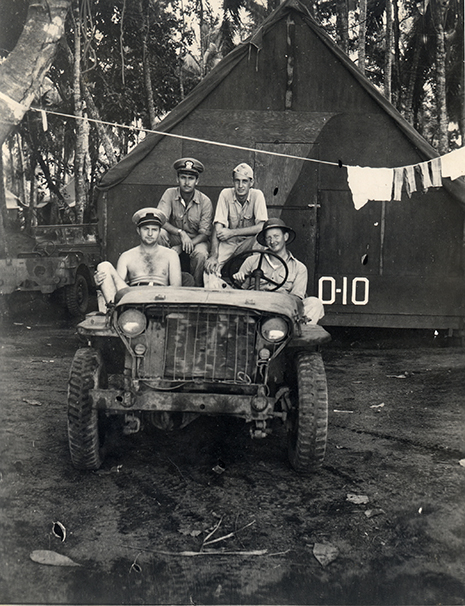
“Neil Compton on Guadalcanal.” Compton in 1944 (back row, on right).  From 40-50-100: Milestones in Arkansas’s Environmental History, University of Arkansas Libraries, Fayetteville. Neil Compton Papers (MC 1091, Box 25, File 6, Image 97).
“Neil Compton on Guadalcanal.” Compton in 1944 (back row, on right). From 40-50-100: Milestones in Arkansas’s Environmental History, University of Arkansas Libraries, Fayetteville. Neil Compton Papers (MC 1091, Box 25, File 6, Image 97).
FAYETTEVILLE, Ark. –The University Libraries’ special collections has launched a digital exhibit, available online, that celebrates environmentalism in the Natural State. “40-50-100: Arkansas’s Natural Environment” commemorates the 40th anniversary of the Buffalo River’s designation as a national river, the 50th anniversary of the founding of the Ozark Society environmental conservation group, and the 100th anniversary of the birth of Neil Compton, founder of the Ozark Society. The Libraries celebrated these anniversaries with an event in 2012.
The digital exhibit includes several photos of Bentonville physician Neil Compton, from his childhood on the family farm near Gentry, to tending azaleas in the Crystal Spring Gardens in Bentonville (now the home of Crystal Bridges Museum of American Art). Documents include a letter Compton wrote his daughter, Ellen, in 1960 where he mentions his idea for a “Buffalo Gorge National Park;” a letter from Gov. Orval Faubus to the U.S. Army Corps of Engineers opposing the dam projects at Gilbert and Lone Rock; posters created by the Buffalo River Improvement Association advocating for the dams and reservoirs; and a fervent letter from Lucile Hannon of Pruitt,, to U.S. Secretary of the Interior Walter J. Hickel demanding that the federal government stay away. The collection is available online through the Libraries’ website.  
Visitors to the digital exhibit will also be able to view Compton’s 1963 film “Opportunity for Arkansas – the Buffalo National River,” which advocated the preservation of the river. The film was recently restored through a grant from the National Film Preservation Foundation.
“Saving the Buffalo River was not an overnight success; instead, it was a battle that lasted years, but, luckily, the river had a core group of supporters who recognized the importance of preserving its pristine beauty,” said Timothy G. Nutt, head of special collections. “This digital exhibit shows how tirelessly Dr. Compton and members of the Ozark Society worked to save the Buffalo.”
The materials in this digital exhibit represent only a fraction of the manuscript collections supporting research on Arkansas’ environmental history. Collections that document the battle over the Buffalo include the Ozark Society Records (MS OZ1 219, 219A-I Ozark and MC 477), the Neil Compton Papers (MC 1091), the Gus Albright Scrapbooks (MC 1295), the Kenneth L. Smith Papers (MC 1423), and the Margaret Hedges typescript reminiscence (MC 1203) of Supreme Court Justice William O. Douglas’s visit and canoe trip on the Buffalo River in 1962, which spurred the formation of the Ozark Society.
The “40-50-100” project is just one of the digital exhibits created by the Libraries to highlight interesting aspects of the state’s history. Other digital exhibits, which can be viewed at scipio.uark.edu, document the civil rights struggle in Arkansas, the history of the apple industry in Northwest Arkansas, and the legacies of Congressman Brooks Hays and political cartoonist George Fisher. Additional information on any of the Libraries’ digital and manuscript collections is available by calling special collections at 479-575-5577.

Contacts:

Timothy G. Nutt, head of special collections
University of Arkansas Libraries
479-575-8443, timn@uark.edu
Molly Boyd, assistant to the dean
University of Arkansas Libraries
479-575-2962, mdboyd@uark.edu

Tuesday, April 30, 2013

American basketflower neglected in some books listing native wildflowers in the Ozarks

Use highlighted live link to view many more photos of American basketflower:
Centaurea americana AKA American basketflower a magnificent annual that needs and deserves more attention and encouragement. Two books by Don Kurz, Ozark Wildflowers and Arkansas Wildflowers, make no reference to Centaurea americana. The fifth edition of Carl Hunter's Wildflowers of Arkansas (1999) mentions the species briefly on page 232 under the discussion of non-native Batchelor's button, with a reference to page 270 for a photo as a seeming afterthought. Why does this matter? The basketflower is a spectacular native that every wildflower enthusiast should be able to recognize. But giving zero attention or only a minor reference close to its cousins, the spotted knapweed and batchelor's button as well as various unrelated thistles, leaves the plant vulnerable to destruction by people attacking non-natives with which it may easily be confused.